
Few accomplishments are as rewarding as waking up in the morning and hitting your target weight. You've worked hard to drop those unwanted pounds all year long, and you deserve a huge round of applause for what you've accomplished. However, if you're like many men and women, getting the sleek, sculpted body you crave is easier said than done. You've got pockets of unwanted fat around your abdomen, thighs, chin, and other areas - fat that just won't go away, despite diet and exercise.
Wouldn't it be nice to just freeze that fat away and forget all about your love handles?
At Southern Cosmetic Laser, our new, revolutionary fat-freezing treatment can help you achieve the toned look you've been dreaming of. That's right - we're talking about literally freezing the unwanted fat off your problem areas without invasive surgeries or extended downtime.
This amazing treatment is called CoolSculpting, and it's the world's leading non-invasive fat reduction procedure. It's specifically designed for people already at their desired weight who want to push past that plateau for real body sculpting results. If you're tired of seeing that excess belly fat, saggy skin, or double chin, CoolSculpting is the procedure for you. Southern Cosmetic Laser offers a wide range of the newest technologies to target fat reduction, skin tightening, facial and body remodeling, body toning, and cellulite reduction.
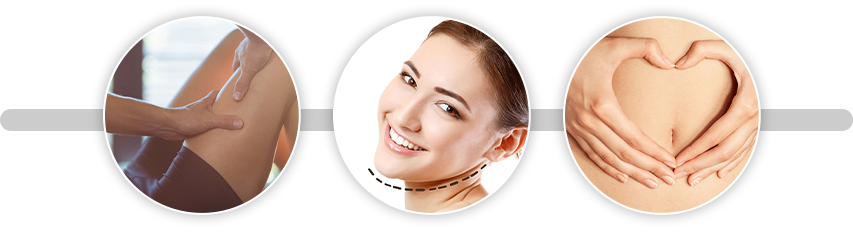
Our Services
Services Area

What is CoolSculpting?
CoolSculpting is an FDA-approved procedure that has undeniable results. With CoolSculpting, you can permanently get rid of your muffin top, fat around your flanks, and more, all from the comfort and convenience of the Southern Cosmetic Laser office.
Technically known as cryolipolysis, CoolSculpting has the ability to reduce the number of fat cells in targeted areas between 20 and 25%. This unique technology uses controlled cooling to freeze and eliminate fat with minimal recovery time. No needles, no scalpels, no liposuction. Just real results provided by a licensed, experienced professional.
While CoolSculpting helps eliminate fat cells in your body, it doesn't harm the surrounding skin and muscles. Instead, it treats fat that is directly under the skin, also called subcutaneous fat. Since CoolSculpting doesn't target visceral fat deposits, this treatment works best for men and women who are approaching or already at their desired weight.
CoolSculpting is approved by the FDA to help reduce fat in the following areas:
- Flanks
- Outer Thighs
- Upper Arms
- Inner Thighs
- Chin
- Back
- Belly and Abdomen
How Does CoolSculpting Work?
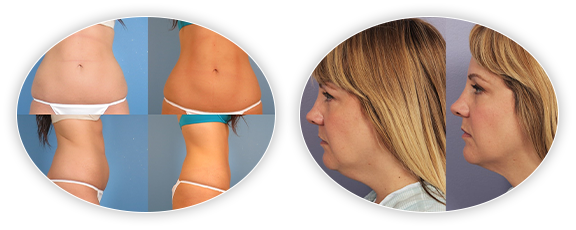
CoolSculpting results are noticeable, proven, and long-lasting, helping you look your best and feel great from every angle. This exciting procedure works because fat cells freeze at higher temps than other tissues. As such, CoolSculpting delivers controlled, targeted cooling to do away with unwanted fat underneath your skin. These fat cells are essentially frozen or crystallized and eventually die. With time, your body will process that fat and will eliminate the dead cells, leaving behind a more sculpted physique.
Here are some quick CoolSculpting facts at a glance, so you have a better idea of why this fat cell elimination treatment is so popular:
- There is no prep time required for CoolSculpting from Southern Cosmetic Laser.
- Patients can expect some very minor discomfort during the procedure. Many patients report no discomfort at all.
- There is little-to-no downtime needed after your CoolSculpting procedure is complete.
- It may take up to 12-16 weeks to see your final results.
- This procedure eliminates fat permanently!
Southern Cosmetic Laser's CoolSculpting Procedure
Our CoolSculpting procedure is crafted around your comfort, with one-on-one attention in a relaxing atmosphere. It all starts with a detailed assessment, which you will complete prior to your treatment. This assessment will help us better understand your goals and desires, so we can freeze away the stubborn fat from the areas that matter most.
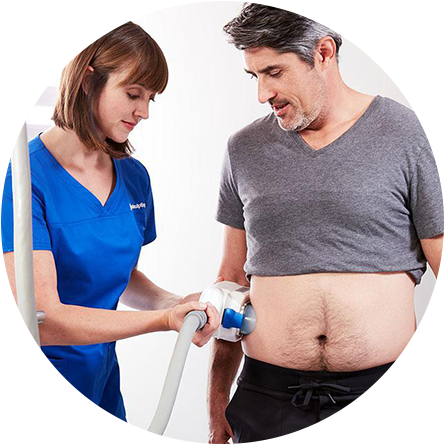
Typical CoolSculpting appointments take about an hour per area, though that time varies with each patient. Because our CoolSculpting applicators use a vacuum system to help with placement, you may feel a pulling sensation in the targeted area. Once placement is complete, we get to work on freezing your fat.
Before treatment, your skin is prepped with an alcohol wipe. A gel pad is then placed on your treatment area to help protect your skin. From there, a cold sensation is delivered through our applicators, which are designed for specific body parts.
Because there is no sedation involved with CoolSculpting, we encourage you to kick back, relax, and watch a little TV. If you prefer, you can also read or use your phone to check your favorite social media sites. Our friendly, experienced CoolSculpting technicians strive to keep you as comfy as possible during this quick treatment. When it's over, you can resume normal activities as soon as you like - there's no recovery or downtime to worry about!
Top CoolSculpting Treatment Areas
CoolSculpting procedures are perhaps best known for eliminating stubborn belly fat, giving the patient a desirable, contoured tummy. However, this treatment is also very effective on other areas of your body:

CoolSculpting for Your Double Chin
While neck fat usually goes hand-in-hand with weight gain, symptoms like double chins can appear even if you're not overweight. CoolSculpting helps solve neck fat problems by eliminating fat cells in the area below your chin, giving you a slim, youthful appearance.

CoolSculpting for Unwanted Belly Fat
Many men and women begin CoolSculpting treatments to destroy fat around the abdomen or midsection. CoolSculpting does so by freezing stubborn subcutaneous fat in the abdominal region, resulting in a trimmed-up tummy. Remember, CoolSculpting does not treat visceral fat, or the fatty tissue surrounding the organs in your abdomen.

CoolSculpting for Your Back
Back fat is a serious problem for many people in the U.S. This includes the upper back (where fat rolls over the bra), the mid-back (near the waist), and the lower back (where fat bulges over the beltline). Back fat can be hard to tone, but with CoolSculpting from Southern Cosmetic Laser in Johns Island, it's more than possible.

CoolSculpting for Your Upper Arms
When it comes to stubborn fat, your upper arms are often the most difficult areas to treat. If you are constantly trying to hide your upper arms from friends and family, CoolSculpting is an excellent option to help overcome your insecurity.

CoolSculpting for Your Love Handles
Sometimes called saddlebags or flanks, love handles are the flabby areas that protrude from your hips. Love handles are often caused by fat retention over long periods of time. They can appear very pronounced in tight clothing, leading to feelings of embarrassment. Common factors that contribute to love handles are age, slow metabolism, hormones, and diets high in sugars and fats. With Southern Cosmetic Laser's CoolSculpting, patients leave behind stubborn love handles, helping them achieve a slimmer, more fit appearance.

CoolSculpting for Your Thighs
If you are in good shape but suffer from chafing or discomfort due to fatty thighs, your solution could be at Southern Cosmetic Laser. Our technicians can help freeze away inner thigh fat, so you feel proud to wear skirts, shorts, and bikinis.

Questions About CoolSculpting? We've Got Answers
Q: Does CoolSculpting really work?
A: Yes! Southern Cosmetic Laser wouldn't be one of the most trusted providers of the treatment if it didn't work. According to recent statistics, CoolSculpting treatments can reduce fat reduction by as much as 25% in the affected area. Contact our office today for your initial consultation, where our team will advise you on how many treatments you need to meet your goals.
Q: How much does CoolSculpting cost?
A: Pricing varies depending on the areas you focus on and how many sessions you need in order to reach your goals. Our team will craft a custom treatment plan specific to you during your initial CoolSculpting consultation.
Q: How quickly will I see results?
A: Many patients can see results as soon as three weeks after their first CoolSculpting procedure in Johns Island. As your body continues to dispose of crystallized fat cells, you can see even more changes with time.
Q: Does CoolSculpting eliminate cellulite?
A: CoolSculpting is designed for fat reduction. However, it may help contribute to cellulite reduction in specific treatment areas. There are currently no FDA clearances for cellulite reduction with CoolSculpting. However, our office offers incredible treatments like Inmode Evolve to reduce the appearance of cellulite and trim, tighten, and tone your skin.
Q: Why should I choose Southern Cosmetic Laser for CoolSculpting in Johns Island?
A: Southern Cosmetic Laser is a CoolSculpting certified practice and has completed advanced training at the CoolSculpting University. With a highly-trained staff of medical professionals, we're one of the leading providers of CoolSculpting in South Carolina. We know that peace of mind is precious these days. That's why we're committed to you and your body contouring transformation every step of the way.
Popular Treatments That Complement CoolSculpting
We are a full-service practice offering Medical Aesthetics and Cosmetic Dermatology services. As such, Southern Cosmetic Laser has several innovative treatments that complement your CoolSculpting procedure. Whether you're looking to tighten up that turkey neck or say goodbye to cellulite, we've got a custom treatment option waiting for you.
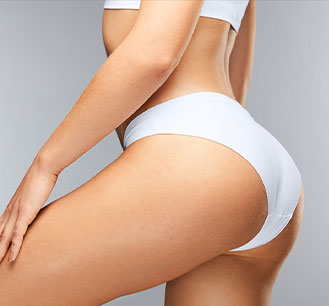
Cellulite Treatment with Sentient Sculpt
Southern Cosmetic Laser is Johns Island's first medical aesthetics practice to offer Sentient Sculpt. This exciting new product reduces fat, remodels skin tissue, and regenerates skin collagen, leaving your skin tight and smooth.
Using microwave technology, Sentient Sculpt uses up to 80% of the energy generated to penetrate fat under your skin. This process destroys fat cells and the fibrous bands that cause dimples, or cellulite. The remaining 20% of energy is used on the upper layers of your skin, tightening and contracting it to improve its overall appearance.
Sentient Sculpt benefits include:
- Long-Lasting Results
- Improved Skin Laxity
- Effective Skin Tightening & Fat Reduction
- Fat Cells Permanently Destroyed
- Younger Looking Skin
- Minimal Discomfort
- Built-In Cooling for Maximum Comfort
Contact Southern Cosmetic Laser today to learn more about the benefits of Sentient Sculpt and how it can be paired with CoolSculpting treatments.
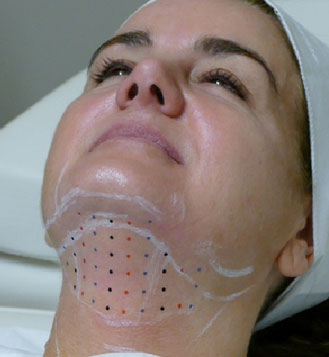
Kybella for Your Double Chin
If you're ready to kiss that double chin goodbye, Kybella could be the solution you need. Kybella is a treatment that deoxycholic acid that breaks down fat cells when injected into the treatment area. It provides noticeable results for improved chin profile.
Kybella Benefits Include:
- Permanent destruction of fat cells
- Quick treatment process
- Patients may see results in 2 to 4 treatments

Facial Remodeling with Inmode Evoke
Inmode Evoke is the first and only FDA-approved, non-invasive product for facial remodeling treatment. Evoke offers tightening and lifting for facial rejuvenation and can help you achieve a more defined neck and jawline.
The Evoke Intelligence System regulates temperature and sense impedance every millisecond, providing remarkable results. Using proven bipolar radiofrequency energy, Evoke sub-dermally remodels your facial tissue. The Evoke technology offers precise, consistent power to achieve optimal results.

Tite, Trim, & Tone with Inmode Evolve
This advanced, state-of-the-art Thermal Body Contouring Technology helps to trim, tighten, & tone your skin at the same time. Evolve's cutting-edge tech can destroy fat, reduce cellulite, and tighten skin. The result? A newfound, youthful appearance and feel. This treatment is perfect for your mommy makeover, eliminating muffin tops, sculpting abs, and addressing fat around your thighs, belly, arms, legs, hips, and knees.
Benefits of Inmode Evolve include:
- Tone and Tighten Skin
- Eliminate Fat Cells
- Reduce Crepey Skin
- Reduce Saggy Skin
- Collagen Stimulation for Improved Skin Elasticity
- Smooth Over Stubborn Fat Pockets
- Even Out and Reduce Skin Irregularities
Contact Southern Cosmetic Laser today to learn more about the benefits of Inmode Evolve and how it can be paired with CoolSculpting treatments.
Discover CoolSculpting Precision and Unlimited Beauty with Southern Cosmetic Laser
When it comes to unmatched patient care and body contouring services in Johns Island, no other practice comes close to Southern Cosmetic Laser. We pour passion into every service we offer, from non-surgical fat cell freezing to laser hair removal. If you're looking to make a change for the better this year, we're here to make your wishes a reality. Contact our office today to learn more about the stunning benefits of CoolSculpting technology. Before you know it, you'll be excited to show off that new bathing suit or bikini on the beach.
 843-277-2240
Free Consultation
Latest News in Johns Island, SC
Traffic relief coming soon to drivers of Johns Island
Autumn Kleinhttps://www.live5news.com/2024/03/18/traffic-relief-coming-soon-drivers-johns-island/
JOHNS ISLAND, S.C. (WCSC) - Charleston County leaders have been working to improve traffic congestion on Johns Island and the area of Maybank Highway and River Road will soon be much easier to travel on.The county has been working on improvements to Maybank Highway since 2004 and will soon have the third and final phase of these improvement projects completed. P...
JOHNS ISLAND, S.C. (WCSC) - Charleston County leaders have been working to improve traffic congestion on Johns Island and the area of Maybank Highway and River Road will soon be much easier to travel on.
The county has been working on improvements to Maybank Highway since 2004 and will soon have the third and final phase of these improvement projects completed. Pitchfork Road connects Fenwick Hall Alle to River Road and will serve as an alternative route to Maybank Highway.
Drivers traveling from James Island to Johns Island will be able to bypass the light at Maybank Highway and River Road by using the new Pitchfork Road. This will also apply to drivers coming in the opposite direction. This road can be used as an alternate route to get to James Island. Pitchfork Road will be officially open for use on the afternoon of March 25 and county leaders encourage everyone to use it.
Construction on Pitchfork Road began in 2022 and leaders are excited to host a ribbon-cutting ceremony to commemorate the official opening of the road. This will take place on March 25.
County Construction Project Manager Sheila Parker says that they are really looking to improve safety and relieve traffic in the area.
“I think the people in general are looking forward to, you know, new infrastructure come into John’s Island to help alleviate traffic. We see, you know, development coming and so we need the infrastructure to really accommodate all that,” Parker says.
Parker says that the county has recently made some other changes to the intersection of Maybank Highway and River Road to further improve the flow of traffic.
“We recently restriped Maybank at the intersection of Maybank and River Road, really to accommodate more storage to the left turn lane,” she says. “Previously the left turn lane would stack up with cars and it would block the through lane going straight and so, that would cause traffic backups. Now with more storage, the left turn lane traffic flow improves, and more people can get into the left turn lane.”
Parker says that all of this work is to benefit the residents and drivers of the community and to make traveling on these roads a little easier.
“It’s great to see headway and, you know, the improvements are coming slowly but surely. We’re looking to relieve traffic and improve safety of this area. This has been a big focus for the county,” Parker says.
The county has some safety improvements coming to River Road soon as well. Crews will be working on the addition of reflective markings and rumble strips to the road. This work will lead to some nighttime closures on River Road from Main Road to Maybank Highway. This will take place from 7 p.m. to 6 a.m. Sunday through Friday for about the next two weeks.
Copyright 2024 WCSC. All rights reserved.
Letters: Johns Island must balance rural life, new developments
From Our Post and Courier Readershttps://www.postandcourier.com/opinion/letters_to_editor/johns-island-must-balance-development-rural-life/article_80657ca6-9f6c-11ee-b188-9b2c159b6e8d.html
The vast majority of Johns Island is rural. Expanses of farms, equestrian trails, hunting, wildlife and tree canopies draw visitors worldwide. This makes Johns Island one of a kind.It is the reason I moved back here after 30 years of visiting yearly to restore my soul.The urban growth on Maybank has drawn wonderful businesses and world-class...
The vast majority of Johns Island is rural. Expanses of farms, equestrian trails, hunting, wildlife and tree canopies draw visitors worldwide. This makes Johns Island one of a kind.
It is the reason I moved back here after 30 years of visiting yearly to restore my soul.
The urban growth on Maybank has drawn wonderful businesses and world-class restaurants, making Johns Island a destination.
Johns Islanders have worked to maintain this balance by coming together to collaborate with local government and other partners to create and implement tools, including the urban growth boundary and rural zoning districts.
These actions have helped Johns Island avoid the fate of becoming a cookie cutter community and keep its special natural rural beauty, culture and ecosystem intact.
This comes with a constant awareness of new developments and a vigilant effort to maintain and preserve the balance of this way of life for future generations.
If we are not intentional in future development, our beloved islands will soon be destroyed.
Some believe extending Interstate 526 will solve this. But I believe it will only bring more traffic that could destroy the wildlife, ecosystem and uniqueness of Johns Island.
Island residents still have the opportunity to maintain a balance of rural and urban areas. Extending I-526 would irreparably tip the scales.
ROBIN DYESS
Johns Island
The Dec. 16 commentary by Sara Hazzard, president and CEO of the South Carolina Manufacturers Alliance, is about union Grinches.
But it might be titled, “There is no joy in Mudville — mighty Casey has struck out,” from the poem, “Casey at the Bat,” by Ernest Lawrence Thayer. The poem is about Casey’s overconfidence when he strikes out. He let two pitches fly by as strikes before missing the next pitch.
Right-to-work states are swinging and missing the ball. Labor unions were created in order to help workers with work-related difficulties such as low pay, unsafe or unsanitary working conditions, long hours and other situations.
Unions bring higher wages for the lowest-paid workers.
According to the U.S. Bureau of Labor Statistics’ annual report on union membership published last January, “Workers who are members of labor unions in the U.S. make 18% more than their nonunion counterparts.”
Which group would you want to be part of?
NANCY ZETTLER
Mount Pleasant
Thank you for Mark Powell’s delightful New Year’s commentary, “Firsts on the First: A quiz for New Year's Day.”
This reminded me of the power of mind over matter, especially the comments on cigarette commercials being banned when President Richard Nixon signed legislation.
It’s been 54 years, and I can still hear the jingle, “Winston tastes good like a cigarette should.”
How pitiful for the child who heard that, believed it and stayed hooked on nicotine for 30 years.
I haven’t smoked in more than 30 years.
Now if we could just get legislation to ban beer commercials, we would have a less drugged America. No one wants to believe alcoholics start with a first taste of beer. I, for one, know better.
“This Bud’s for you.”
To a happy, healthier new year.
SUE GEORGE
Summerville
To submit a letter to the editor, send an email to letters@postandcourier.com or fill out the form on our online portal.
Letters can be a maximum of 250 words and are subject to editing for clarity, tone and libel. They must carry the writer’s name and address for publication and a daytime telephone number for verification.
Get a weekly recap of South Carolina opinion and analysis from The Post and Courier in your inbox on Monday evenings.
Charleston city councilman looking at ways to alleviate traffic on Johns Island
Conley Graysonhttps://abcnews4.com/news/local/charleston-city-councilman-looking-at-ways-to-alleviate-traffic-on-johns-island-wciv-news-4
JOHNS ISLAND, S.C. (WCIV) — Balancing development and existing infrastructure is an issue Charleston County and city leaders are facing.Ask any John's Island residents their main complaint and they will likely tell you traffic.Charleston city councilman for District 3, Jim McBride, is brainstorming ways to alleviate the stop-and-go drive on and off the island.On Maybank Highway, two lanes are coming onto Johns Island and only one going off towards James Island.Read more:...
JOHNS ISLAND, S.C. (WCIV) — Balancing development and existing infrastructure is an issue Charleston County and city leaders are facing.
Ask any John's Island residents their main complaint and they will likely tell you traffic.
Charleston city councilman for District 3, Jim McBride, is brainstorming ways to alleviate the stop-and-go drive on and off the island.
On Maybank Highway, two lanes are coming onto Johns Island and only one going off towards James Island.
Read more: "Blackbaud Inc. executive arrested on DUI charges."
Councilman McBride said it's a bottleneck and taxpayers are sitting in traffic, wasting time and money.
There are three projects in the works.
McBride said the first project that will alleviate this problem is the Northern Pitchfork, which is expected to be finished in March.
It will allow motorists to take a right coming onto the island at the fairly new stoplight near Fenwick Hall Allee and take them to River Road, meaning no one has to sit on Maybank.
Read more: "'Whatever you do, do your best' SC native helps design Super Bowl half time show outfits."
The second project is restriping Maybank Highway near the intersection of River Road.
Right now, there are short turn lanes and McBride said cars get backed up, slowing traffic coming onto the island.
He said after the striping, there will be a left turn lane only. The middle lane will be three lanes and a new right turn lane will be added.
The third planned project is the nearly $30 million Southern Pitchfork, creating a possible left turn when you come onto Johns Island.
Read more: "Thieves steal 12 French bulldog puppies worth $32k from North Charleston home: NCPD report."
The traffic light for the Northern Pitchfork would potentially be moved and realigned with the entrance to the Southern Pitchfork closer to the bridge.
"If that gets funded, and if that happens, the estimated completion time would be somewhere somewhere around 2028," McBride said. "I don't want to wait for four years and no one on the island wants to wait for four years. So, we're trying to come up with some ideas to improve things before that."
McBride said these projects will allow traffic to flow better coming onto the island, but there is nothing funded now to help people get off the island.
"Every single morning taxpayers are sitting in traffic wasting money wasting time," McBride said. "And it's a problem that needs to get fixed."
Read more: "2 awarded Citizen Lifesaving Awards for helping Mt. Pleasant officer struck by vehicle."
One idea McBride is researching is reversible lanes.
With reversible lanes, the middle lane would switch directions in the evening, potentially alleviating traffic.
"In the morning you have two lanes going off the island, and then in the evening, you'd have two lanes coming on the island," McBride said.
McBride said it would require large signaling and possibly entry gates to make it very clear which direction people would drive.
"In 2019, the county did a study on this idea, and they determined that it would improve traffic going off the island in the morning by 66%. That's a huge improvement," McBride said.
Read more: "Friends and family win $1 million in Mega Millions, split earnings six ways."
McBride said the county recommended they could not do reversible lanes because currently there are too many stop lights too close together.
He said if the Northern Pitchfork is realigned with the future Southern Pitchfork, there would be one intersection closer to the bridge which would create a more continuous stretch of road, potentially allowing this idea to work.
McBride said the reversible lane idea would cost about $5 million.
"In comparison, the Southern Pitchfork is estimated to be about $30 million. So, $5 million is a lot of money, but it will save taxpayers so much money over time and save time. Instead of sitting in traffic you know, wasting time and gas money," McBride said.
Read more: "Joint Commission to boost North Charleston education holds inaugural meeting."
This is just one idea McBride is researching.
He said he is working alongside Mayor William Cogswell, city staff, and county council members Jenny Honeycutt and Joe Boykin to find a solution for Johns Island traffic.
River Road and Maybank Highway are state-owned, meaning they are managed and funded by the county.
McBride said this requires collaboration between the city and county.
Read more: "Celebration of the outdoors kicks off as 42nd annual SEWE comes back to the Lowcountry."
This November, the county will vote on a 2024 Half Cent Sales Tax Referendum to potentially replace an old sales tax set to expire in the next 2 years.
McBride said it would raise an estimated $5.4 billion.
He said $2 billion would help fund the Mark Clark Expressway, and the other $3.4 billion would help fund the County Infrastructure Improvement Projects.
$277M hospital proposed for Johns Island
Ross Nortonhttps://charlestonbusiness.com/277m-hospital-proposed-for-johns-island/
Trident Medical Center has submitted a Certificate of Need to the South Carolina Department of Health and Environmental Control to build a $277 million hospital on Johns Island. The application is for a 50-bed acute care hospital between Maybank Highway and Cane Slash Road, across from the Live Oak Square development.Projections for Johns Island Hospital show that within the first three years it will create nearly 300 jobs, contribute $10 million in non-income taxes to support the community and pay $70 million in salaries, wages and b...
Trident Medical Center has submitted a Certificate of Need to the South Carolina Department of Health and Environmental Control to build a $277 million hospital on Johns Island. The application is for a 50-bed acute care hospital between Maybank Highway and Cane Slash Road, across from the Live Oak Square development.
Projections for Johns Island Hospital show that within the first three years it will create nearly 300 jobs, contribute $10 million in non-income taxes to support the community and pay $70 million in salaries, wages and benefits, the organization said in a release.
“We are excited to continue making medical care more accessible to residents in our historically underserved communities,” Trident Health President and CEO Christina Oh said in the news release. “Currently on Johns Island and neighboring communities, it can take residents 30 to 45 minutes to drive to their nearest hospital, and often longer in heavy traffic and inclement weather. Our goal is to increase access to timely, high quality and affordable health care services.”
Trident Medical Center’s chief of the medical staff and medical director of emergency services, Dr. Scott Hayes, said he sees firsthand the results of delayed care.
“For residents who live far from emergency medical care and who may be experiencing a medical emergency like a heart attack or a stroke, minutes can mean the difference between life and death,” he said in the news release. “Access to care close to home is critical, especially in areas like Johns Island and the surrounding communities, that have frequent traffic delays.”
Trident Health surgeon Dr. Thomas Litton, who lived on Johns Island for 20 years and recently moved from there largely due to increasing traffic congestion and limited access routes off the island, said, “The rapid population growth and development of Johns Island, as well as its role as the sole gateway to Kiawah, Seabrook and Wadmalaw Islands, has created a strong need for a full-service hospital in the area. Residents on those islands have never had a full-service hospital. Trident’s hospital on Johns Island and their freestanding ER on James Island will greatly improve residents’ access to much-needed medical care.”
Johns Island Hospital will be located seven miles from James Island Emergency, Trident’s new freestanding ER at 945 Folly Road, Charleston, that will open in the next few weeks.
Plans call for Johns Island Hospital to have 50 beds with space to expand to 150 beds, 40 medical/surgical/stepdown beds, 10 ICU beds, 20 ER rooms, four operating rooms, two endoscopy suites and a cardiac catheterization lab. The hospital also would have two CT scanners, an MRI, two diagnostic radiology suites and a fluoroscopy room.
In addition to the hospital, services would include medical offices for primary care and specialists as well as outpatient imaging and support such as breast imaging, rehabilitation and other outpatient therapy services.
“From our first discussions about building a hospital on Johns Island, we have been committed to creating a thoughtful plan that preserves the natural beauty of Johns Island,” Oh said in the release. “We will honor the strong Gullah Geechee cultures of the community; we will partner with the areas’ community and businesses; and will promote the important and unique contributions of Johns Island’s agricultural community.”
The proposed Johns Island Hospital is in addition to nearly $140M in capital investments currently underway at Trident Health’s hospitals, Trident Medical Center and Summerville
Vandalism causes 60-gallon diesel spill on Johns Island: Charleston Water System
Ian Kayanja & Claire Weberhttps://abcnews4.com/news/local/vandalism-causes-60-gallon-diesel-spill-on-johns-island-charleston-water-system-south-carolina-enviormental-news-wciv-abc-news-4-2024
CHARLESTON COUNTY, S.C. (WCIV) — Clean-up efforts are underway after vandalism resulted in a 60-gallon diesel fuel spill on Johns Island, officials with Charleston Water System said Monday.The diesel fuel spilled into a stormwater ditch behind homes along Colonel Harrison Drive that leads to the Stono River. Residents initially discovered and smelled the fuel spill over the weekend. The South Carolina Department of Health and Environmental Control was called on Sunday to help with the spill.Read more: ...
CHARLESTON COUNTY, S.C. (WCIV) — Clean-up efforts are underway after vandalism resulted in a 60-gallon diesel fuel spill on Johns Island, officials with Charleston Water System said Monday.
The diesel fuel spilled into a stormwater ditch behind homes along Colonel Harrison Drive that leads to the Stono River. Residents initially discovered and smelled the fuel spill over the weekend. The South Carolina Department of Health and Environmental Control was called on Sunday to help with the spill.
Read more: "Successful oil spill cleanup in Charleston by Coast Guard, no marine life threats."
“Our contractor cleaned up a portion of the spill, immediately called in a professional environmental remediation company, and notified SC DHEC and the EPA’s National Response Center,” said Mike Saia, Charleston Water System's public information administrator. “It may take several days for them to recapture all remnants of the fuel.”
This is the third instance of vandalism to contractor equipment in recent weeks, and the Charleston County Sheriff's Office is investigating.
“I mean it is a very, in depth vandalism. It's not just a rock through the window. It’s someone who came out here to destroy this 200-something thousand-dollar machine,” said Chad Hunter, owner of Hunter Landworx Construction, the contractor onsite.
Hunter showed up to his Johns Island job site Monday expecting to quickly finish a project he’s been working on since October. Instead, he found his machinery completely vandalized.
“There are wires in there, cut and hidden like that. We wouldn't be able to find it if we didn't see that all the fuel around it, my guys would've gotten in the machine. He put rocks and all in our engine to try to blow the engine up,” Hunter said.
But the damage doesn’t stop there.
Read more: "Suspicion arises over two Colleton County mobile home fires in three days."
The vandalism led to a 60-gallon diesel fuel spill into the surrounding area along the Stono River. Charleston Water System owns the construction project, and its staff says they’ve never seen damage this bad.
“We don't see a lot of vandalism. If we do, it's very, very minor, and easy to repair. But this is a different situation because not only did the person damage the equipment related to the job, but they've also damaged the environment,” Saia said.
Saia said they were able to soak up as much of the liquid fuel as possible and the Coast Guard confirmed to CWS that the spill didn't reach the river.
Now, Hunter must pick up the pieces.
He said the damage to his machine alone will cost a few hundred thousand dollars and his crews are now behind on all their current projects.
“We're out here to clean up somebody's mess as well as take time from our family and slow down the project. I mean, it's hurting everybody, the neighborhood, everything around us is just getting messed up from one person,” Hunter said.
“One hour's worth of work is causing weeks of fix-up.”
News 4 has reached out to CCSO for more information.
Disclaimer: