Laser Hair Removal
& Laser Skin Services Near Santee, SC
Ask Us Anything
Unveil the New You with Southern
Cosmetic Laser

As Santee's top medical aesthetics and cosmetic dermatology practice, we believe that everyone deserves to love the way they look. At the end of the day, the only opinion that matters about your well-being and appearance is yours. That's why our team is committed to providing you with the most affordable, effective medical cosmetic Services in Santee - so you can live your best life without compromise. We treat men and women of all ages and ethnicities.
Founded in 2007, Southern Cosmetic Laser has evolved into a multi-specialty practice offering the latest medical aesthetics and laser skin Services in Santee, SC. If you are wanting the most advanced, highest-level of service, you have come to the right place.
Our services start and end with the client in mind. At Southern Cosmetic Laser, we strive to exceed our customer's expectations with every service we offer, whether it's laser skin rejuvenation, laser hair removal, anti-aging skincare, or fillers for wrinkles. We combine years of experience, the latest technologies, techniques, and personalized services to ensure your visit is pleasurable, informative, and private.
When you choose Southern Cosmetic Laser, you, the customer comes first. We take a client-centered approach to everything we do, meaning we're happy to discuss available treatment options with you. We'll weigh the pros and cons of each procedure with your needs in mind, ensuring your treatment is effective. We believe that an informed client is a happier client, and we're not shy about educating you on the tools we use and the Services we individually customize.
Whether you're looking to completely transform your appearance or simply get a healthier glow, we are here to help. Our team tailors the appropriate laser treatment or medical aesthetic service to achieve your desired results, not somebody else's. Combined with the safest, most medically-approved procedures and products, you'll love the way you look when you leave Southern Cosmetic Laser.
Laser Skin Services
Services
Services Area

Your trust, confidence, and satisfaction are our highest priorities - no if's, and's, or but's.
Some of our most popular services include:

Laser Skin Services

Laser Hair Removal

Botox

Facials

Dermal Fillers

Body Sculpting

Services for Acne and Acne Scarring

Men's Services
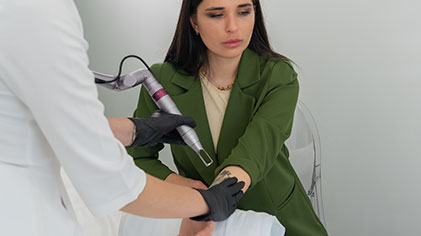
Tattoo Removal
For More Information, Call Us
 843-277-2240

Innovative Laser Skin Services
in Santee, SC
If you have never had a laser skin treatment before, it might seem like a scary proposition at first. However, as many of our patients will tell you, procedures like laser hair removal can be life-changing. Laser skin services are not only effective - they're growing in popularity. According to a study, nearly 4.1 million laser skin services were performed in 2019. Whether you're looking to remove unwanted hair or achieve a more unified skin tone, laser services can help.
Some of the most requested laser skin services at Southern Cosmetic Laser include:
Laser Hair Removal in Santee, SC
Unwanted hair. You know it's there, and just about every day, you've got to shave, pluck, and tweeze your way to removing it. But what if we told you there was a permanent solution to reduce your unwanted hair problem?
At Southern Cosmetic Laser, our laser hair removal services target hair follicles giving your skin the smooth, silky feel you've may desire. Laser hair removal services save you time in shaving - a proposition that seemed impossible a few years ago.
Using the most up-to-date lasers for our services, we offer a permanent hair-reduction solution for all skin types, making it a quick, effective treatment for any ethnicity. Our state-of-the-art laser technologies emit a laser beam that penetrates your hair follicles, destroying the root while preserving your skin.

Our clients are ditching their razors and choosing our lasers to remove hair from their bikini lines, underarms,
upper lips, legs, arms, face, chest and back.
A few benefits of laser hair removal include:
- Eliminate Stubborn, Unwanted Hair
- Prevent Ingrown Hairs
- Quick and Effective
- Remove Bumps, Stubble, Irritation, and Razor Burn
- Smooth, Glassy Skin That You Will Love
- Affordable Plans from Southern Cosmetic Laser
If this is your first foray into laser hair removal services, you're probably wondering how it all works.
Don't worry; we've got you covered!
What is Laser Hair Removal?
Laser hair removal is a medical procedure that uses a laser, or concentrated beam of light, to remove unwanted hair on your body. During our laser hair removal services, the light from the laser is absorbed by the melanin in your hair. That light is then converted to heat, which damages your hair follicles, preventing future hair growth. Most laser hair removal services are quick and can be completed in about 30 minutes. This treatment can be accomplished during a lunch break or quickly after work.
What Happens During Laser Hair Removal Treatment?
Southern Cosmetic Laser hair removal involves several steps. Once you schedule an appointment, you will need to shave prior to your treatment. You will need to avoid plucking, waxing, threading and depilatory creams at least three weeks prior to treatment. During your day of treatment, the following will occur:
- Clean the treatment area to kill germs and bacteria
- Provide you with protective goggles or glasses to wear.
- Commence laser hair removal treatment using our cutting-edge lasers.
- A topical cooling product such as aloe may be applied after the treatment.
- Send you on your way feeling smooth and satisfied.
How Many Sessions Will I Need?
Services usually require an average of six to eight sessions with periodic touchups. However, sessions vary depending on your schedule and the area of your body that needs treatment. You may need more services on areas where hair grows quickly, like your upper lip. Some areas, like places on your back, will not require as many laser treatment sessions.
Skin Rejuvenation in Santee, SC
We offer the most advanced skin rejuvenation services for all skin types for both men and women. We believe in these 3 Basic Principles of Aging!
- Skin Integrity
- Toxins
- Dermal Fillers
At Southern Cosmetic Laser we can't turn back the hands of time, but we've seen by applying these three steps in a systematic approach you can achieve long lasting, amazing more youthful results. You may even have people say to you, "Wow, you look amazing! What's your secret?"
Natural aging and a lifetime of involuntary facial muscle actions contribute to the formation of tiny wrinkles, creases and fine lines that can make you look angry, tired or older than you feel. Over time skin loses volume, collagen and elastin and can become thinner and begin to sag.
At Southern Cosmetic Laser, our skin rejuvenation services are some of the most popular laser skin services offered. Skin rejuvenation is a non-surgical treatment that helps you look as vibrant as you feel. Unlike traditional cosmetic surgeries, proper skin rejuvenation doesn't require you to put your skin or health at risk to achieve beautiful results. Instead, our skin rejuvenation options are safe and offer multiple benefits for people suffering from skin defects like scarring, acne and aging.

We can rejuvenate your skin using a variety of laser skin services in Santee, including resurfacing, energy-based laser tightening and lifting, and other laser-based services.
There are numerous benefits to skin rejuvenation, including:
- Reduction of Wrinkles & Fine Lines
- Diminished Sunspots
- Acne Suppression
- Improvement of Acne Scars
- Redness and Rosacea Relief
Contact our office today to learn which one of our cutting-edge skin rejuvenation services is best for your lifestyle.

Skincare Injectables and Fillers
in Santee, SC
Dermal fillers have changed the face of the medical cosmetic industry. About 10 million dermal services are applied every year. Fillers are used in shaping the face, lifting, volumizing and minimizing wrinkles. Fillers replace fat and bone less, lift and support. When combined with laser skin services and neurotoxins our patients can stick to an easy regimen that helps them maintain gorgeous, smooth skin.
How Do Dermal Fillers Work?
Many of our patients know they want anti-aging services like fillers to help smooth out wrinkles and help lift. However, they don't know how dermal fillers, or injectables, work.
As people age, they lose collagen, elastin, and perhaps more importantly, hyaluronic acid. Hyaluronic acid helps retain moisture in your skin. Injectables that utilize hyaluronic acid and other substances help replace lost moisture, resulting in fuller, more radiant skin. Injectables and fillers can also help add extra volume to your lips and cheeks and firm up saggy skin.
Often, our patients see results after a single treatment, which can last as long as 9 to 18 months. Our patients choose Southern Cosmetic Laser because our fillers give a natural-looking result without affecting facial expressions, making for a discreet yet effective treatment.
Where Are Injectables Used?
We discuss and explain various types of fillers and decide which is best for you.
At Southern Cosmetic Laser, we offer personalized filler services for a number of problem areas, such as:
- Marionette Lines: These lines go directly down from the corners of your mouth and become more pronounced over time as your face loses volume.
- Cheeks: As you age, your cheeks lose volume, making you look gaunt and elderly. Our fillers plump up your cheeks, giving you a more youthful look without plastic surgery.
- Lips: Plumping up our patient's lips is one of our most popular injectable skincare services in Santee. Our lip filler services are customized to each patient's preference, meaning we can help with subtle enhancements or obvious upgrades.
- Jaw and jawline areas.
Anti-Aging Injectable Services in Santee, SC
Finding the right filler can be confusing, but our experienced medical team will work with you to discover the best treatment options for your goals. Some of our most popular injectable services include:

Dermal Fillers: Products such as Juvederm XC, Radiesse, Bellafill and Restylane are used for facial lifting and contouring. They are great for filling in thin lips, tightening saggy skin, helping with skin laxity, and more.

Botox: Botox and similar products like Jeuveau, Dysport, and Xeomin are wrinkle-smoothing neuromodulators that treat horizontal lines across the forehead. They are also very effective at reducing crow's feet and perpendicular frown lines between your eyebrows and other areas.

Nova Threads: This is another non-surgical option that can create an immediate facelift, which tightens and smooths your skin. Products like Nova Lyft and Nova Mesh are excellent if you have saggy skin, thin lips, or need collagen stimulation. We help you decided which is best for your face and skin type.

B12 Shots: B12 works wonderfully and promotes the growth of healthy skin cells, which repair damaged skin. Aging and certain medical conditions affect your body's ability to absorb B12, leaving you tired and forgetful. Regular B12 injections from Southern Cosmetic Laser help your body absorb the B12 it needs. That way, you're more alert during the day and benefit from healthier skin, nails, and hair.
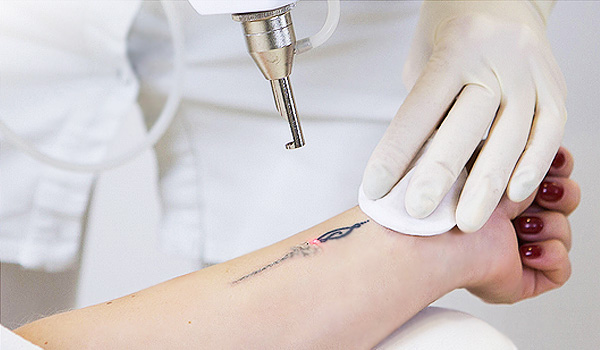
Laser Tattoo Removal in Santee, SC
Getting a tattoo is an art. Removing a tattoo is another art. There are numerous variables that are considered in laser tattoo removal. Southern Cosmetic Laser is compassionate in helping rid those unwanted tattoos. We use superior technologies to customize services for the patient and their tattoo. We work with clients to provide optimal outcomes at affordable, comparable pricing. We want to spend your money wisely and want to achieve the best outcome possible with minimal services.
Professional and Efficient from First Encounter
From anti-aging fillers for your lips to precise laser hair removal along your bikini line, Southern Cosmetic Laser has the team and tools to serve you with excellence. When it comes to cosmetic dermatology and medical aesthetics, we take pride in our experience and passion. We provide more than quick, effective services - we give our patients a relaxing, comforting experience catered to their needs. Our unparalleled customer service and state-of-the-art laser skin services in Santee, SC, keeps our clients coming back.
We know that aging is inevitable, but that doesn't mean you have to succumb to the aging process. Call or click today to learn more about the Southern Cosmetic Laser difference and how we have thrived for over 18 years as Santee's premier skincare and anti-aging treatment center.
843-277-2240
Book Appointment
Latest News in Santee, SC
Drivers stranded for hours on I-95 after watermelon truck catches fire
wltx.comhttps://www.wltx.com/article/news/local/i-95-traffic-backup-watermelon-truck/101-28867b2a-026b-4097-8b51-d60cae36ecf0
Many drivers found themselves parked on exit ramps, while others turned around after hours of waiting.SANTEE, S.C. — Drivers traveling along Interstate 95 Wednesday morning found themselves in gridlock following a complete shutdown of the highway after a watermelon truck caught fire.Around 7 a.m. Wednesday morning, a tractor trailer caught fire, ...
Many drivers found themselves parked on exit ramps, while others turned around after hours of waiting.
SANTEE, S.C. — Drivers traveling along Interstate 95 Wednesday morning found themselves in gridlock following a complete shutdown of the highway after a watermelon truck caught fire.
Around 7 a.m. Wednesday morning, a tractor trailer caught fire, blocking all northbound lanes of I-95 near mile marker 101. That is near Lake Marion in Clarendon County. The incident caused all northbound lanes to close.
For Santee resident Henry Frazier, the shutdown brought traffic to a standstill he had never seen before.
"No, not like this, not in Santee. Man, it was rough this morning," Frazier said. "I had a dentist appointment across 95, so I parked my car about a mile and walked to the dentist because I knew I wasn’t going to make it to my appointment. So, that's where I'm at now, going to walk back to get my car. It’s been rough and really impacted us this morning."
Joe Pinto was traveling to work when he got stuck in traffic. "I've read the paper, email and Facebook, and I think I'm going to head back to Charleston and come back another day."
RELATED: Traffic again flowing on I-95 North after early morning tractor trailer fire blocked all lanes
Many drivers found themselves parked on exit ramps, while others turned around after hours of waiting.
However, Anthony Coppula and his wife, who were traveling from Florida to New York, took the gridlock in stride. "This isn't the first time, and I'm one that doesn't question why. I just go with whatever gets thrown at you and make the best of it."
Despite being stuck for hours, Coppula remained optimistic, acknowledging the long journey ahead. "It looks like we're about 13 hours or so." Thankfully, he said they were prepared.
"We always pack, I mean, but we didn't expect something like this," Coppula said. "But we packed some drinks and snacks and stuff like that that we've been munching on. But it's fine."
I-95 northbound has since re-opened.
Commentary: Opposition recklessly threatens SC energy security
Jimmy Statonhttps://www.postandcourier.com/opinion/commentary/santee-cooper-dominion-sc-natural-gas/article_504b5ae6-d0b7-11ee-9b8a-eb517bb6b8be.html
Organizations that recklessly promote an all-solar power grid at the expense of South Carolina’s energy security are at it again, firing off tweets, emails and newspaper columns employing tired scare tactics and gross distortions of reality. Their script is perhaps worthy of a cheap horror film but has no place in real conversations about South Carolina’s energy needs.Here’s the truth: South Carolina cannot meaningfully or responsibly increase solar power without adding natural gas generation.Solar panels don&...
Organizations that recklessly promote an all-solar power grid at the expense of South Carolina’s energy security are at it again, firing off tweets, emails and newspaper columns employing tired scare tactics and gross distortions of reality. Their script is perhaps worthy of a cheap horror film but has no place in real conversations about South Carolina’s energy needs.
Here’s the truth: South Carolina cannot meaningfully or responsibly increase solar power without adding natural gas generation.
Solar panels don’t produce electricity when the sun isn’t shining, but you need your air conditioner to run during thunderstorms on hot August afternoons. Battery storage is limited in duration and relies on other energy sources. It is inadequate and expensive as a backup. We need the flexibility of natural gas generation to ramp up and down according to the sun’s availability.
Saying we can do away with proven baseload generation and get by with solar, backed up only by battery storage, is a perfect way to put South Carolinians in danger. Winter Storm Elliott delivered several days of frigid temperatures and cloudy skies. Solar panels couldn’t have met power needs during the day, let alone recharged batteries to power our heat pumps at night.
Santee Cooper and Dominion Energy SC are in the early stages of planning a new, jointly built natural gas power plant that will save money and increase flexibility and reliability for customers of both utilities. This plant uses low-risk, proven technology already seen in hundreds of power plants across the country and in South Carolina. It is the most common and cheapest form of power generation available today.
We have a balanced approach that meets the energy needs of our customers, as validated by an independent consultant to the S.C. Public Service Commission. The commission approved our resource plan (with 1,020 megawatts of natural gas power and 2,100 megawatts of new solar power by 2032) as the lowest-cost, lowest-risk solution for future customer needs. Our plan also would close four coal units as new natural gas comes online, and add battery storage as technology improves and costs fall. This plan is not only the most cost-effective solution but also will significantly cut emissions.
Legislators are considering a bill that would let state-owned Santee Cooper jointly build power plants with privately owned utilities such as Dominion. The legislation also encourages Santee Cooper and Dominion to consider building a natural gas power plant at Dominion’s former generating site, Canadys.
This is important: The proposed legislation doesn’t approve the plant or allow us to bypass federal or state regulatory oversight, although the opponents want you to think it does. We will need to seek commission approval and provide full design plans, including cost projections, additional transmission needs and other details. We will need to obtain all required state and federal permits. All of these processes are public and include opportunity for your input.
In terms of environmental impact, the planned natural gas plant will affect fewer than 600 acres, most of that existing brownfield or right-of-way acreage. The Canadys site already has electric transmission access. The pipeline route options under consideration would utilize existing right-of-way to provide fuel at the site. Bringing a similar amount of solar power online would require more than 11,000 acres for the panels alone, plus additional land for transmission.
Backing up 2,100 megawatts of solar power solely with batteries would be reckless and a danger to our customers. Natural gas technology is proven and widely used. By jointly building a larger power plant than either of us would build alone, Santee Cooper and Dominion will see significant economies of scale in cost and efficiency and provide unmatched reliability for millions of South Carolinians.
It’s not just common sense. It’s the only responsible path forward.
Jimmy Staton is the president and CEO of Santee Cooper, South Carolina’s state-owned power and water utility.
Get a weekly recap of South Carolina opinion and analysis from The Post and Courier in your inbox on Monday evenings.
Clemson announces S.C. Peanut Growers Meeting
Denise Attawayhttps://news.clemson.edu/clemson-announces-s-c-peanut-growers-meeting/
Download imagePrecision agriculture, genetic improvements, sustainability and economics are just a few topics on the agenda for the 44th South Carolina Peanut Growers meeting.The meeting is slated for Jan. 25, 2024, at the Santee Conference Center, 1737 Bass Drive, Santee, South Carolina, 29142. Registration begins at 8:30 a.m. The meeting opens with a welcome from Richard Rentz, chairman of the South Carolina P...
Precision agriculture, genetic improvements, sustainability and economics are just a few topics on the agenda for the 44th South Carolina Peanut Growers meeting.
The meeting is slated for Jan. 25, 2024, at the Santee Conference Center, 1737 Bass Drive, Santee, South Carolina, 29142. Registration begins at 8:30 a.m. The meeting opens with a welcome from Richard Rentz, chairman of the South Carolina Peanut Board, at 9:40 a.m.
The morning session includes a peanut market update from Dell Cotton, manager of the Peanut Growers Cooperative Marketing Association, an update from Hugh Weathers, South Carolina commissioner of agriculture, and an economic outlook from Nathan Smith, Clemson Cooperative Extension Service economist.
Kendall Kirk, Clemson Extension precision agriculture engineer, will give an update on using precision agriculture in peanut research. Allison Randell, American Peanut Council sustainability director, will talk about The Sustainable U.S. Peanut Initiative.
The morning session ends with a presentation by Jeff Dunne, North Carolina State University peanut breeder, addressing phenotyping for genetic improvements in peanut.
Peanut yield contest awards will be announced during lunch. Prize drawings will be held immediately following lunch before the afternoon session starts. The KMC Grand Prize is a $5,000 voucher to be used towards a piece of equipment or parts – growers must visit the Kelley Manufacturing Company booth for entry and be certified as a peanut grower with an Farm Service Agency farm number.
Grand Prize from Amadas is the use of a new 4-row or 6-row Amadas Peanut Digger/Inverter for the 2024 harvest season or $10,000 towards the purchase of a new Amadas Self-Propelled Peanut Combine or $5,000 towards the purchase of a new Amadas 4-row or 6-row Pull-Type Peanut Combine. To be eligible, growers must be 2023 commercial peanut growers who intend to plant peanuts in 2024. Growers must be present to win.
Following lunch, attendees will get an update from the National Peanut Board. Dan Anco, Clemson Extension peanut specialist, will give a peanut variety and management update. The meeting will end at about 2 p.m.
Continuing education and pesticide credits will be available, as will newly updated copies of the Peanut Money-Maker 2024 Production Guide. For more information, contact Dan Anco, Clemson Extension peanut specialist at (630) 207-4926 (cell) or email, danco@clemson.edu.
-END-
Santee Cooper Strengthens Leadership with Four Appointments to Management Team
santeecooper.comhttps://www.santeecooper.com/global-news/2024/011824-Management-Changes.aspx
MONCKS CORNER, S.C. – Santee Cooper recently welcomed four new appointments to its management team – Director of Inclusive Strategies Traci J. Grant, Senior Director of Generation Carey Salisbury, General Auditor Jason McKinney and General Manager of Projects and Construction Scott Smith. These appointees will help further the company’s mission with years of valuable experience in their respective fields.Traci J. Grant has been named to a new position at Santee Cooper, Director of Inclusive Strategies, reporting to C...
MONCKS CORNER, S.C. – Santee Cooper recently welcomed four new appointments to its management team – Director of Inclusive Strategies Traci J. Grant, Senior Director of Generation Carey Salisbury, General Auditor Jason McKinney and General Manager of Projects and Construction Scott Smith. These appointees will help further the company’s mission with years of valuable experience in their respective fields.
Traci J. Grant has been named to a new position at Santee Cooper, Director of Inclusive Strategies, reporting to Chief Financial and Administration Officer Ken Lott. Grant, who will also continue in her role as Corporate Secretary, joined Santee Cooper 26 years ago as a financial analyst and has worked in the budget, customer billing, pricing and planning areas. She was named Group Leader of Pricing in May 2004 and Manager of Budget and Customer Billing in February 2017. She moved to Director of Corporate Services in March 2020. Grant has also served on Santee Cooper’s Corporate Engagement and Oversight Committee and is a recent graduate of the Diversity Leaders Initiative (DLI), an award-winning program of Furman University’s Riley Institute. She has a Bachelor of Science from South Carolina State University, where she studied agribusiness and economics.
Carey Salisbury has been named Senior Director of Generation, effective Jan. 6. Salisbury has served as Interim Senior Director of Generation since August 2023 and will continue to report to Chief Operations Officer Mike Finissi. Salisbury, a registered Professional Engineer, is a 2000 graduate of Clemson University, where he earned a Bachelor of Science in electrical engineering. He joined Santee Cooper in 2001 and has held several positions during his 23 years of service, including Engineer with Capital Projects, Maintenance Engineer, Group Supervisor of Electrical Maintenance, Superintendent of Electrical Maintenance, Manager of Renewable Generation and Manager of Cross Generating Station.
Jason McKinney was hired as General Auditor in October and reports to Chief Audit and Risk Officer Monique Washington. Prior to joining Santee Cooper, McKinney served nearly six years as the Director of Internal Audit for Lexington Medical Center in Columbia, South Carolina. He previously served 17 years as Joint Venture Audit Director at Roper Saint Francis Healthcare in Charleston. McKinney received his bachelor’s degree in accounting from the University of South Carolina Darla Moore School of Business in 1993 and his MBA in accounting and hospital administration from The Citadel in 2007.
Scott Smith joined Santee Cooper in September as the General Manager of Projects and Construction and reports to Chief Operations Officer Mike Finissi. Smith retired from American Electric Power as the Senior Vice President of AEP Transmission Field Service after more than 22 years with the utility. He also held several positions in the banking industry from 1987 to 2001, including Vice President at Citi Bank and First Fidelity. Smith enlisted in the United States Army in 1982 and completed his service as a Captain in the combat engineering field in 1994. He is a 1984 graduate of the Valley Forge Military Academy and College with a degree in finance. He also received a degree in accounting and finance from Drexel University’s LeBow College of Business in 1987.
Santee Cooper is South Carolina’s largest power provider, the ultimate source of electricity for 2 million people across the state, and one of America’s Best Midsize Employers as named by Forbes. Through its low-cost, reliable and environmentally responsible electricity and water services, and through innovative partnerships and initiatives that attract and retain industry and jobs, Santee Cooper helps power South Carolina. To learn more, visit www.santeecooper.com and follow #PoweringSC on social media.
Santee Cooper Contracts with Lowcountry Company to Replace 80-Ton Gate at the Pinopolis Lock
santeecooper.comhttps://www.santeecooper.com/global-news/2023/121323-Tainter-Gate-Replacement.aspx
MONCKS CORNER, S.C. – For just the second time in the 81-year history of Santee Cooper’s Jefferies Hydroelectric Station, the 80-ton emergency Tainter gate at the Pinopolis Lock is being replaced – with the help of a local company.Santee Cooper has partnered with W International in Goose Creek, South Carolina, to fabricate and assemble a new emergency Tainter gate for the Pinopolis Lock, which connects Lake Moultrie to the Tailrace Canal and the Cooper River. W International, located in the Bushy Park Industrial area...
MONCKS CORNER, S.C. – For just the second time in the 81-year history of Santee Cooper’s Jefferies Hydroelectric Station, the 80-ton emergency Tainter gate at the Pinopolis Lock is being replaced – with the help of a local company.
Santee Cooper has partnered with W International in Goose Creek, South Carolina, to fabricate and assemble a new emergency Tainter gate for the Pinopolis Lock, which connects Lake Moultrie to the Tailrace Canal and the Cooper River. W International, located in the Bushy Park Industrial area, is an advanced metal fabricator specializing in large, complex structural fabrications.
“Consistent with our mission, our goal is to work with businesses and industry in the state to help South Carolina thrive,” said Jimmy Staton, Santee Cooper President and CEO. “W International has a strong reputation as an industry leader in large fabrications. We’re proud to be able to say the gate was made right here in the Lowcountry and that we, as South Carolinians, are working together to energize South Carolina.”
“Working hand-in-hand with Santee Cooper on replacing the emergency Tainter gate upstream of the Pinopolis Lock system has been an extraordinary journey,” said Jim Logan, President of W International. “Our team feels honored to have contributed to such a pivotal project, particularly one located a mere 22 miles upriver from our facility – a testament to the local community.”
“Teaming up with Santee Cooper has been nothing short of inspiring,” continued Logan. “Collaborating on critical infrastructure aligns seamlessly with our shared vision of supporting Santee Cooper’s mission to enhance the quality of life for every South Carolinian. Together, we have strived to deliver not just a gate replacement, but a testament to resilience and progress for the region. We are immensely proud to have been part of this milestone achievement.”
The fully assembled Tainter gate was loaded on a barge at W International on Dec. 9 and arrived at the Pinopolis Lock after about a six-hour journey up the West Branch of the Cooper River. Crews with Superior Cranes Inc., which has a Charleston-area location in Moncks Corner, are placing the gate in its final location this week, pending any weather delays. The previous gate was damaged in September 2022 when Hurricane Ian blew through the state. The original Tainter gate, installed in 1942, reached its end-of-life stage in 2003. Those gates now reside next to each other at a permitted fish attractor location in Lake Moultrie.
The Tainter gate allows Santee Cooper to safely perform maintenance on the lock's upper miter gates. The gate also is designed to mitigate an unlikely “free flow” incident and, in the event of such an emergency, it will raise to choke off the flow of water through the lock system.
W International has delivered approximately 50 products weighing as much as 600,000 pounds via barge shipment. Their team is devoted to supporting the nation’s armed forces, and they are especially proud to contribute to U.S. Navy submarines and surface vessels.
W International SC, LLC manufactures large, close-tolerance, complex structures for critical Aerospace, Defense, and Energy projects. W International’s manufacturing facility is located in Goose Creek, South Carolina, on the Cooper River, 12 miles north of Charleston’s port, on 45 acres, with 480,000 square feet of indoor heavy manufacturing space. The facility utilizes large CNC machining centers and sophisticated welding equipment to produce highly technical, complex components.
Santee Cooper
Santee Cooper is South Carolina’s largest power provider, the ultimate source of electricity for 2 million people across the state, and one of America’s Best Midsize Employers as named by Forbes. Through its low-cost, reliable and environmentally responsible electricity and water services, and through innovative partnerships and initiatives that attract and retain industry and jobs, Santee Cooper helps power South Carolina. To learn more, visit www.santeecooper.com and follow #PoweringSC on social media.
Disclaimer: