Laser Hair Removal
& Laser Skin Services Near Summerville, SC
Ask Us Anything
Unveil the New You with Southern
Cosmetic Laser

As Summerville's top medical aesthetics and cosmetic dermatology practice, we believe that everyone deserves to love the way they look. At the end of the day, the only opinion that matters about your well-being and appearance is yours. That's why our team is committed to providing you with the most affordable, effective medical cosmetic Services in Summerville - so you can live your best life without compromise. We treat men and women of all ages and ethnicities.
Founded in 2007, Southern Cosmetic Laser has evolved into a multi-specialty practice offering the latest medical aesthetics and laser skin Services in Summerville, SC. If you are wanting the most advanced, highest-level of service, you have come to the right place.
Our services start and end with the client in mind. At Southern Cosmetic Laser, we strive to exceed our customer's expectations with every service we offer, whether it's laser skin rejuvenation, laser hair removal, anti-aging skincare, or fillers for wrinkles. We combine years of experience, the latest technologies, techniques, and personalized services to ensure your visit is pleasurable, informative, and private.
When you choose Southern Cosmetic Laser, you, the customer comes first. We take a client-centered approach to everything we do, meaning we're happy to discuss available treatment options with you. We'll weigh the pros and cons of each procedure with your needs in mind, ensuring your treatment is effective. We believe that an informed client is a happier client, and we're not shy about educating you on the tools we use and the Services we individually customize.
Whether you're looking to completely transform your appearance or simply get a healthier glow, we are here to help. Our team tailors the appropriate laser treatment or medical aesthetic service to achieve your desired results, not somebody else's. Combined with the safest, most medically-approved procedures and products, you'll love the way you look when you leave Southern Cosmetic Laser.
Laser Skin Services
Services
- Unveil the New You with Southern Cosmetic Laser
- Innovative Laser Skin Services in Summerville, SC
- Skin Rejuvenation in Summerville, SC
- Skincare Injectables and Fillers in Summerville, SC
- Anti-Aging Injectable Services in Summerville, SC
- Laser Tattoo Removal in Summerville, SC
- Professional and Efficient from First Encounter
Services Area

Your trust, confidence, and satisfaction are our highest priorities - no if's, and's, or but's.
Some of our most popular services include:
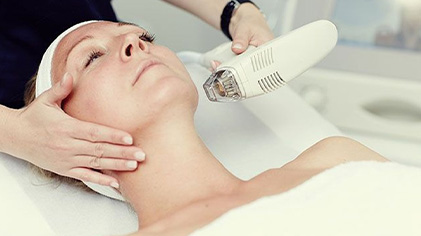
Laser Skin Services
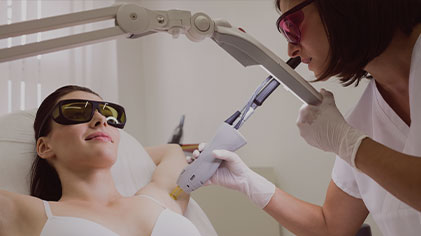
Laser Hair Removal
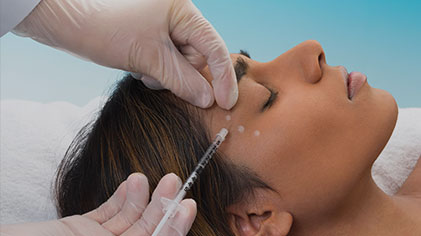
Botox

Facials
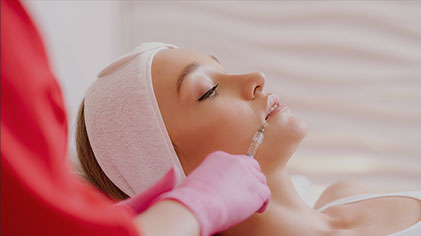
Dermal Fillers

Body Sculpting

Services for Acne and Acne Scarring
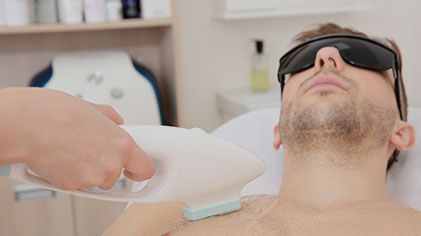
Men's Services
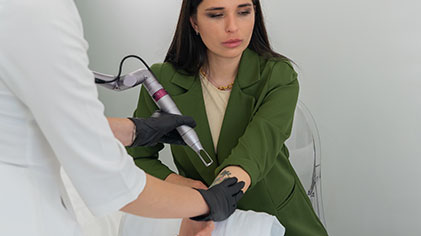
Tattoo Removal
For More Information, Call Us
 843-277-2240

Innovative Laser Skin Services
in Summerville, SC
If you have never had a laser skin treatment before, it might seem like a scary proposition at first. However, as many of our patients will tell you, procedures like laser hair removal can be life-changing. Laser skin services are not only effective - they're growing in popularity. According to a study, nearly 4.1 million laser skin services were performed in 2019. Whether you're looking to remove unwanted hair or achieve a more unified skin tone, laser services can help.
Some of the most requested laser skin services at Southern Cosmetic Laser include:
Laser Hair Removal in Summerville, SC
Unwanted hair. You know it's there, and just about every day, you've got to shave, pluck, and tweeze your way to removing it. But what if we told you there was a permanent solution to reduce your unwanted hair problem?
At Southern Cosmetic Laser, our laser hair removal services target hair follicles giving your skin the smooth, silky feel you've may desire. Laser hair removal services save you time in shaving - a proposition that seemed impossible a few years ago.
Using the most up-to-date lasers for our services, we offer a permanent hair-reduction solution for all skin types, making it a quick, effective treatment for any ethnicity. Our state-of-the-art laser technologies emit a laser beam that penetrates your hair follicles, destroying the root while preserving your skin.
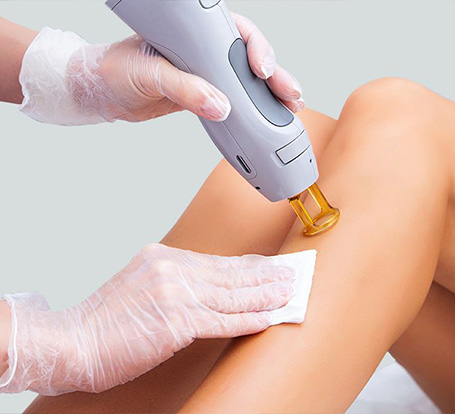
Our clients are ditching their razors and choosing our lasers to remove hair from their bikini lines, underarms,
upper lips, legs, arms, face, chest and back.
A few benefits of laser hair removal include:
- Eliminate Stubborn, Unwanted Hair
- Prevent Ingrown Hairs
- Quick and Effective
- Remove Bumps, Stubble, Irritation, and Razor Burn
- Smooth, Glassy Skin That You Will Love
- Affordable Plans from Southern Cosmetic Laser
If this is your first foray into laser hair removal services, you're probably wondering how it all works.
Don't worry; we've got you covered!
What is Laser Hair Removal?
Laser hair removal is a medical procedure that uses a laser, or concentrated beam of light, to remove unwanted hair on your body. During our laser hair removal services, the light from the laser is absorbed by the melanin in your hair. That light is then converted to heat, which damages your hair follicles, preventing future hair growth. Most laser hair removal services are quick and can be completed in about 30 minutes. This treatment can be accomplished during a lunch break or quickly after work.
What Happens During Laser Hair Removal Treatment?
Southern Cosmetic Laser hair removal involves several steps. Once you schedule an appointment, you will need to shave prior to your treatment. You will need to avoid plucking, waxing, threading and depilatory creams at least three weeks prior to treatment. During your day of treatment, the following will occur:
- Clean the treatment area to kill germs and bacteria
- Provide you with protective goggles or glasses to wear.
- Commence laser hair removal treatment using our cutting-edge lasers.
- A topical cooling product such as aloe may be applied after the treatment.
- Send you on your way feeling smooth and satisfied.
How Many Sessions Will I Need?
Services usually require an average of six to eight sessions with periodic touchups. However, sessions vary depending on your schedule and the area of your body that needs treatment. You may need more services on areas where hair grows quickly, like your upper lip. Some areas, like places on your back, will not require as many laser treatment sessions.
Skin Rejuvenation in Summerville, SC
We offer the most advanced skin rejuvenation services for all skin types for both men and women. We believe in these 3 Basic Principles of Aging!
- Skin Integrity
- Toxins
- Dermal Fillers
At Southern Cosmetic Laser we can't turn back the hands of time, but we've seen by applying these three steps in a systematic approach you can achieve long lasting, amazing more youthful results. You may even have people say to you, "Wow, you look amazing! What's your secret?"
Natural aging and a lifetime of involuntary facial muscle actions contribute to the formation of tiny wrinkles, creases and fine lines that can make you look angry, tired or older than you feel. Over time skin loses volume, collagen and elastin and can become thinner and begin to sag.
At Southern Cosmetic Laser, our skin rejuvenation services are some of the most popular laser skin services offered. Skin rejuvenation is a non-surgical treatment that helps you look as vibrant as you feel. Unlike traditional cosmetic surgeries, proper skin rejuvenation doesn't require you to put your skin or health at risk to achieve beautiful results. Instead, our skin rejuvenation options are safe and offer multiple benefits for people suffering from skin defects like scarring, acne and aging.
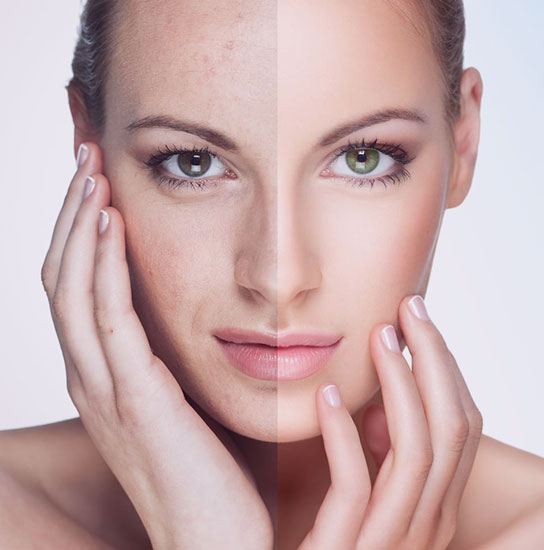
We can rejuvenate your skin using a variety of laser skin services in Summerville, including resurfacing, energy-based laser tightening and lifting, and other laser-based services.
There are numerous benefits to skin rejuvenation, including:
- Reduction of Wrinkles & Fine Lines
- Diminished Sunspots
- Acne Suppression
- Improvement of Acne Scars
- Redness and Rosacea Relief
Contact our office today to learn which one of our cutting-edge skin rejuvenation services is best for your lifestyle.
Skincare Injectables and Fillers
in Summerville, SC
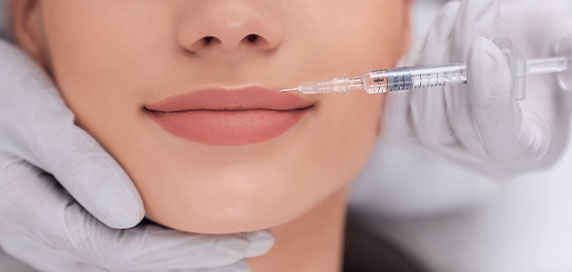
Dermal fillers have changed the face of the medical cosmetic industry. About 10 million dermal services are applied every year. Fillers are used in shaping the face, lifting, volumizing and minimizing wrinkles. Fillers replace fat and bone less, lift and support. When combined with laser skin services and neurotoxins our patients can stick to an easy regimen that helps them maintain gorgeous, smooth skin.
How Do Dermal Fillers Work?
Many of our patients know they want anti-aging services like fillers to help smooth out wrinkles and help lift. However, they don't know how dermal fillers, or injectables, work.
As people age, they lose collagen, elastin, and perhaps more importantly, hyaluronic acid. Hyaluronic acid helps retain moisture in your skin. Injectables that utilize hyaluronic acid and other substances help replace lost moisture, resulting in fuller, more radiant skin. Injectables and fillers can also help add extra volume to your lips and cheeks and firm up saggy skin.
Often, our patients see results after a single treatment, which can last as long as 9 to 18 months. Our patients choose Southern Cosmetic Laser because our fillers give a natural-looking result without affecting facial expressions, making for a discreet yet effective treatment.
Where Are Injectables Used?
We discuss and explain various types of fillers and decide which is best for you.
At Southern Cosmetic Laser, we offer personalized filler services for a number of problem areas, such as:
- Marionette Lines: These lines go directly down from the corners of your mouth and become more pronounced over time as your face loses volume.
- Cheeks: As you age, your cheeks lose volume, making you look gaunt and elderly. Our fillers plump up your cheeks, giving you a more youthful look without plastic surgery.
- Lips: Plumping up our patient's lips is one of our most popular injectable skincare services in Summerville. Our lip filler services are customized to each patient's preference, meaning we can help with subtle enhancements or obvious upgrades.
- Jaw and jawline areas.
Anti-Aging Injectable Services in Summerville, SC
Finding the right filler can be confusing, but our experienced medical team will work with you to discover the best treatment options for your goals. Some of our most popular injectable services include:
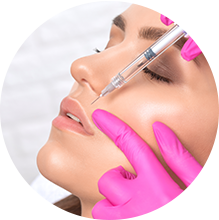
Dermal Fillers: Products such as Juvederm XC, Radiesse, Bellafill and Restylane are used for facial lifting and contouring. They are great for filling in thin lips, tightening saggy skin, helping with skin laxity, and more.
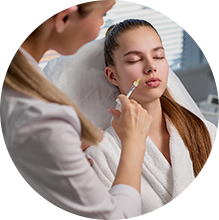
Botox: Botox and similar products like Jeuveau, Dysport, and Xeomin are wrinkle-smoothing neuromodulators that treat horizontal lines across the forehead. They are also very effective at reducing crow's feet and perpendicular frown lines between your eyebrows and other areas.
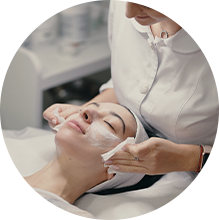
Nova Threads: This is another non-surgical option that can create an immediate facelift, which tightens and smooths your skin. Products like Nova Lyft and Nova Mesh are excellent if you have saggy skin, thin lips, or need collagen stimulation. We help you decided which is best for your face and skin type.

B12 Shots: B12 works wonderfully and promotes the growth of healthy skin cells, which repair damaged skin. Aging and certain medical conditions affect your body's ability to absorb B12, leaving you tired and forgetful. Regular B12 injections from Southern Cosmetic Laser help your body absorb the B12 it needs. That way, you're more alert during the day and benefit from healthier skin, nails, and hair.
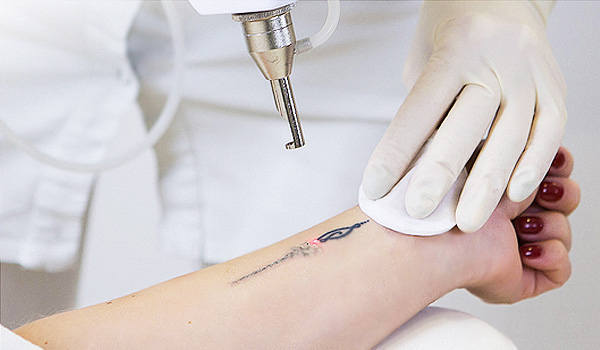
Laser Tattoo Removal in Summerville, SC
Getting a tattoo is an art. Removing a tattoo is another art. There are numerous variables that are considered in laser tattoo removal. Southern Cosmetic Laser is compassionate in helping rid those unwanted tattoos. We use superior technologies to customize services for the patient and their tattoo. We work with clients to provide optimal outcomes at affordable, comparable pricing. We want to spend your money wisely and want to achieve the best outcome possible with minimal services.
Professional and Efficient from First Encounter
From anti-aging fillers for your lips to precise laser hair removal along your bikini line, Southern Cosmetic Laser has the team and tools to serve you with excellence. When it comes to cosmetic dermatology and medical aesthetics, we take pride in our experience and passion. We provide more than quick, effective services - we give our patients a relaxing, comforting experience catered to their needs. Our unparalleled customer service and state-of-the-art laser skin services in Summerville, SC, keeps our clients coming back.
We know that aging is inevitable, but that doesn't mean you have to succumb to the aging process. Call or click today to learn more about the Southern Cosmetic Laser difference and how we have thrived for over 18 years as Summerville's premier skincare and anti-aging treatment center.
843-277-2240
Book Appointment
Latest News in Summerville, SC
Summerville family leaves apartment over mold, health concerns
Melissa Rademakerhttps://www.live5news.com/2024/03/01/summerville-family-leaves-apartment-over-mold-health-concerns/
SUMMERVILLE, S.C. (WCSC) - A Summerville family says they moved out of their rented apartment at the recommendation of a doctor after months of seeing mold across the unit.Breanna McCalla says her family moved to Summerville in the fall, but when they signed their lease at the Latitude at Wescott, they had no idea they would be moving again in less than six months.“I think, a week after moving in that we noticed the first amount of mold up on the vents, which was the first thing that we noticed,” McCalla says....
SUMMERVILLE, S.C. (WCSC) - A Summerville family says they moved out of their rented apartment at the recommendation of a doctor after months of seeing mold across the unit.
Breanna McCalla says her family moved to Summerville in the fall, but when they signed their lease at the Latitude at Wescott, they had no idea they would be moving again in less than six months.
“I think, a week after moving in that we noticed the first amount of mold up on the vents, which was the first thing that we noticed,” McCalla says.
She provided a screenshot of an email sent in October, alerting property managers about the mold, and asking that it be checked out and addressed. But McCalla says not only did nothing seem to get fixed, it instead got worse.
“I also have also lost multiple sentimental things that I can’t get back. I had a bag full of all my kids’ baby blankets that was covered in mold. You know, like baby items and clothing and things that you can’t replace,” McCalla says.
Staff at the Latitude at Wescott did not comment on the situation despite three attempts to ask if they were aware of the issue and, if so, whether any effort was made to address it.
Mary Templeton, a fellow in an Equal Justice Housing Works Program, specializes in renter cases at Charleston Pro Bono. She says tenants do have rights under South Carolina law.
“A lot of people don’t know their rights because South Carolina landlord-tenant law is not necessarily intuitive,” Templeton says. “So a big thing that I think that all tenants should know in South Carolina is just to make sure to document any issues you’re having. The more evidence you have of a problem, the easier it is to get it resolved, even if it does require court action.”
Parts of the South Carolina Residential Landlord and Tenant Act say landlords must “comply with the requirements of applicable building and housing codes materially affecting health and safety” and “make all repairs and do whatever is reasonably necessary to put and keep the premises in a fit and habitable condition.”
“I was constantly stressed about it with the kids, mainly with the mold. I mean, the other things we cleaned, and you know, it’s fine, but the mold, I know how serious mold is,” McCalla says.
She provided emails with management through December and January documenting continued mold appearances on vents and windows. She says the last straw for their family was when her daughter developed a persistent cough and her other two children also seemed to struggle with breathing.
“We’re doing doctors and taking antibiotics. She wasn’t testing for anything and we were starting to put the pieces together,” McCalla says.
On Feb. 10 at a follow-up doctor appointment, the provider made a note on McCalla’s daughter’s visit notes. It states, “Seek care at COEM (Center for Occupation & Environmental Medicine) for mold exposure along with treatment for cough symptoms.”
“The first thing she said was immediately you need to get out the only way you’re going to start feeling better and you know healing from this is removing yourself from the mold,” McCalla says.
Templeton says Charleston Pro Bono gets at least weekly if not daily requests for help with tenant issues. She says there are specific timelines for when certain types of issues should be fixed, and a professional can walk someone through their rights if they have the documentation.
“The more evidence you have of a problem, the easier it is to get it resolved, even if it does require court action,” Templeton says. “You always have to put a repair request for those things in writing. Landlords don’t have a duty to fix things unless they’ve received a written notice about the repairs that need to be made.”
While they are not in the habit of taking on mold cases because of the cost, she says documenting everything does a lot if you want to build a case to break your lease. Templeton says a mold case can be hard to prove but not impossible if people have the proof.
“With mold cases, if someone is looking into some sort of damages where you know, they think they’ve been injured because of the mold, their children are sick things of that nature…It’s very hard for legal aid providers to take on those cases just because we don’t have the sort of capital needed to kind of front the bill for those sorts of lawsuits,” Templeton says. “Typically, in those sorts of lawsuits. It’s my understanding that expert witnesses are needed, you know, who have to be paid. You get the property tested by maybe environmental organizations, things like that to see what the risk level is.”
McCalla, when breaking her lease, checked a box claiming to break through “no fault” not wanting to pay because of the mold maintenance issues. She says they have been in touch with a potential lawyer and are planning to get the family tested for mold levels at COEM.
“I know that I did as much as I could have I also wish I would have done more like I wish I would have been like in their face telling them like this is not okay,” McCalla says.
Copyright 2024 WCSC. All rights reserved.
Residents sound alarm about apartment complex condition issues in Summerville
Melissa Rademakerhttps://www.live5news.com/2024/03/26/residents-sound-alarm-about-apartment-complex-condition-issues-summerville/
SUMMERVILLE, S.C. (WCSC) - Former and current residents at a Summerville apartment complex are sharing their stories, alleging bad communication from management and deteriorating conditions, after seeing one woman come forward about a mold problem.In March, Breanna McCalla detailed a mold problem that she says forced her to move her family out of the Latitude at Wescott.Madison Harris...
SUMMERVILLE, S.C. (WCSC) - Former and current residents at a Summerville apartment complex are sharing their stories, alleging bad communication from management and deteriorating conditions, after seeing one woman come forward about a mold problem.
In March, Breanna McCalla detailed a mold problem that she says forced her to move her family out of the Latitude at Wescott.
Madison Harriss says she experienced something similar when she spotted mold in her unit.
“When I first saw it, I started off by sending emails to the front office just letting them know about it. I also made a couple of trips into the office to talk to someone as well,” Harris says.
Harris feels she did everything right when she first saw mold nearly a year after she moved in. She says it took months of emailing and visiting the office to get someone in her unit to check out the issue.
“And it was frustrating because all they did was paint over it with some KILZ and called it a day. So it didn’t feel like it was resolved because it came back shortly after,” Harris says.
Harris says the mold and mildew-resistant paint job was too little too late, and when her lease was up in 2021, she left but took her story with her and shared her experience with anyone asking about living in the area.
While current resident Casey Hendricks says she hasn’t seen mold, her communication problems started before she even got on the property.
“Within three days of our move-in date, they told me that we could no longer have the three-bedroom apartment on the first floor they instead were moving us to a two-bedroom apartment temporarily on the third floor, which made it really difficult with two little kids and a dog,” Hendricks says.
Despite paying her deposit and hiring movers, Hendricks’ family was in a space too small. When they were finally allowed to relocate to a 3-bedroom months later, further communication issues cost her hundreds of dollars. Her moving company spent hours sitting in the parking lot on the day of the switch, waiting for management to allow them into the unit. When the company ran out of time that day, Hendricks had to pay movers to come back.
Once inside, Hendricks says the conditions were concerning. She pointed out water stains and missing vanity draws and knobs.
“The vanity that was never fixed. It was like this when we moved in. I did do a walk-through with the property manager and she is aware of this as of last November and when I moved in and it still has not been repaired,” Hendricks says.
Now Hendricks is facing mounting water and sewer bills, more than quadruple what she budgeted as average cost, and she wants answers. But with no repairs to her apartment yet, she doesn’t think she’ll ever get the help she’s asking for.
“So many other apartments are filled with mold. It definitely makes you wonder what might be out there in your air ducts and stuff that you’re not seeing,” Hendricks says.
Harris says while she lived there, she faced other maintenance issues besides mold like Hendricks.
“It just felt like they really didn’t care to fix the problem,” Harris says.
Latitude at Wescott management declined to comment when asked to answer questions for this story.
Copyright 2024 WCSC. All rights reserved.
Halter to run for town council
Brandon Robertshttps://www.postandcourier.com/journal-scene/community-news/halter-to-run-for-town-council/article_ced4a4c8-b373-11ee-9cf6-fbb28887b5d7.html
A second candidate has announced his intent to seek the seat representing District 3 on Summerville Town Council.Matt Halter, a local business owner and engineer, said he decided to run for office because he believes his resume qualifies him to tackle many of Summerville’s current problems.“I also believe your representative should be elected by you, not appointed by a select few elitists and those currently in power,” he said. “It’s time we had more than just figureheads in our local government &n...
A second candidate has announced his intent to seek the seat representing District 3 on Summerville Town Council.
Matt Halter, a local business owner and engineer, said he decided to run for office because he believes his resume qualifies him to tackle many of Summerville’s current problems.
“I also believe your representative should be elected by you, not appointed by a select few elitists and those currently in power,” he said. “It’s time we had more than just figureheads in our local government – we need rock-solid leaders fighting for the best interests of our town and its taxpayers.”
Halter said that, over time, Summerville’s leadership “has bloated our government to the point of dysfunction” and has “recklessly allowed developers to overrun our town, bringing with them unmanageable traffic and a maze of red tape.”
“This is not leadership; it is a failure to serve the public interest,” he said. “While I support change and growth, the growth Summerville’s leaders approve needs to be in the best interest of our town. Some development can actually add to the value of our town, while apartment home communities, for example, add major traffic concerns, overrun our schools and produce housing that is not affordable, driving up the cost of rent and home ownership.”
A resume provided to the Journal Scene by Halter shows experience in government, the private sector and as a small business owner.
“I’m not an elitist in a line of politicians – I’m a regular citizen,” he said. “It’s time to bring strength and common sense back to our council. It’s time your family’s needs outweigh the wants of a privileged few. This is not about politics as usual; it’s about restoring a government that works for its people and bridges that gap between government and its citizens so that the government is ‘of the people, by the people and for the people. We need a government that listens, acts and delivers. I’m rock-solid and here to ensure Summerville thrives for all its residents.”
Halter has been married to his wife, Donna, for 32 years. She is an elementary school teacher in Dorchester School District 2 and manages the books for their business, Benchmark LDS.
Their son, Matt Jr., is a civil engineer, and their daughter, Lauren, is a registered nurse. Matt and Donna have two grandchildren.
Today's Top Headlines
Matt is a graduate of Stratford High School and The Citadel. He became a registered professional engineer, land surveyor and licensed general contractor. His career began in Charleston, where, as an engineer and stormwater superintendent, he led projects and managed a team of more than 80 employees.
Matt went to work for the town of Summerville in 1996 as the town engineer and public works director. During this time, he wrote the town’s first development standards and founded the South Carolina Association of Stormwater Managers.
Matt ventured into the private sector in 2004, applying his engineering, land surveying and project management experience as the owner and president of Benchmark LDS.
“One of my more notable contributions was the design and construction of the Summerville Miracle League field on South Laurel Street,” he said. “This project wasn’t just about building a field; it was about creating a space where everyone in the community, regardless of their abilities, could come together and enjoy the spirit of the game.”
As one of the founding board members and president of the Summerville Miracle League, Matt, along with a team of citizens, raised more than $500,000 for the field, which was a joint venture between the town and private entities, which he said showcases his ability to “lead, collaborate and deliver.”
He has served on the Dorchester County Transportation Authority and was a multiple-term member of the town’s Commercial Design Review Board.
“In every role, I have demonstrated a consistent commitment to the betterment of Summerville,” he said. “My actions and achievements speak volumes about my dedication, making me not just a candidate for the town council but a true steward of the community’s well-being and future.”
‘State-of-the-art’ sports complex on its way to Dorchester Co. despite delays
Molly McBridehttps://www.live5news.com/2024/02/26/state-of-the-art-sports-complex-its-way-dorchester-co-despite-delays/
SUMMERVILLE, S.C. (WCSC) - Some big changes are coming to a more than $12 million sports complex in Summerville.The Oakbrook Sports Complex, which will be located at the current Oakbrook YMCA, will include “state-of-the-art” turf sports fields and more.“This is where, if you talk to anybody in our area, ‘I learned how to play baseball here, I learned how to swim here, ...
SUMMERVILLE, S.C. (WCSC) - Some big changes are coming to a more than $12 million sports complex in Summerville.
The Oakbrook Sports Complex, which will be located at the current Oakbrook YMCA, will include “state-of-the-art” turf sports fields and more.
“This is where, if you talk to anybody in our area, ‘I learned how to play baseball here, I learned how to swim here, I learned how to soccer here,’ so this is where we started, and now where we want to take to a whole new level,” Summerville YMCA CEO Joe Debney says.
The Summerville YMCA will contribute 17 acres of land, and the county will foot the bill, which has more than doubled in the last three years.
Right now, the fields have poor drainage, uneven turf, and chalk outlines for fields.
Once finished, the new complex will include two soccer fields and other multi-use athletic fields with subsurface drainage, lighting, parking, concessions, a playground, and restrooms.
“If you come out here our fields need rest,” Debney says. “Being able to dry these fields off quickly, being able to have a better facility for these kids, where we don’t have rainy days, where they don’t have to go somewhere else to play.”
Dorchester County Council Chairman Todd Friddle says the new complex will allow the county to host travel sports in an area where outdoor recreation is exploding.
“With a first-class facility, not only for the local community but travel tourism. People coming in here to bring teams to travel, stay spend money in the Summerville market, in the Dorchester area,” Friddle says.
This project is a part of the county’s broader goal to revitalize the Oakbrook area overall using TIF funds, which Friddle explained as tax revenue from the area being put back into it.
Friddle says they were partnered with a different organization for the project originally, but “couldn’t work out the logistics.”
They’re currently in the permitting process and hope to break ground on the project over the summer if all goes as planned, Friddle says. Once they break ground, he estimates the complex will take about 18 months to be completed.
Copyright 2024 WCSC. All rights reserved.
Southern breakfast chain to enter South Carolina market in Summerville
Charleston Businesshttps://charlestonbusiness.com/southern-breakfast-chain-to-enter-south-carolina-market-in-summerville/
A Louisville, Ky.-based breakfast chain with an emphasis on biscuits will open its first South Carolina location in Summerville this year, with plans to also open a Fort Mill location.Biscuit Belly, a Kentucky based “craft casual” brunch restaurant serving up warm hospitality and chef-driven gourmet biscuit breakfast sandwiches, will open a store this fall at 118 West Richardson Ave., Summerville, according to a news release. The chain will also open stores in Norfolk, Va., and Raleigh, N.C., this year.Biscuit Belly...
A Louisville, Ky.-based breakfast chain with an emphasis on biscuits will open its first South Carolina location in Summerville this year, with plans to also open a Fort Mill location.
Biscuit Belly, a Kentucky based “craft casual” brunch restaurant serving up warm hospitality and chef-driven gourmet biscuit breakfast sandwiches, will open a store this fall at 118 West Richardson Ave., Summerville, according to a news release. The chain will also open stores in Norfolk, Va., and Raleigh, N.C., this year.
Biscuit Belly’s current franchise group, DGB Tenn LLC, will be spear-heading the brand’s new locations. Additionally, it expects further expansion into the northern Virginia market as early as fall 2024, the release stated.
“Growing with Biscuit Belly has been an incredible experience so far,” said Clint Umphrey, operating partner for DGB, said in the release. “The brand has created a delicious and craveable menu based on some damn good biscuits and in return, has cultivated a strong following from its customers. We are thrilled to be close to the opening of our two next locations in Norfolk and Raleigh and can’t wait to integrate into the communities.”
The brand has also announced that current franchise partners, Todd Gallinek and Deepen Patel, have signed leases for their first two locations coming to the greater Charlotte market, including Fort Mill in South Carolina, at 2147 W. Highway 160 Suite 101.
“We’re thrilled to finally be able to announce the addresses for our first two locations coming to the Charlotte area,” said Deepen Patel, Biscuit Belly franchisee, in the release. “We know that Biscuit Belly will be a perfect fit for Charlotte’s vibrant food scene and the community will appreciate the better brunch experience the brand provides.”
Founded by Lauren and Chad Coulter in 2019, and franchising since 2020, Biscuit Belly has become a staple in their home state of Kentucky, the release stated. Known for their chef-inspired offerings revolving around a scratch-made biscuit, boozy beverages, and a bright, modern environment, it has seen rapid success locally and is eager to continue expansion across expanded markets.
“We’re thrilled to finally have nailed down the addresses for our newest locations in Virginia, North Carolina and South Carolina,” said Chad Coulter, founder and CEO of Biscuit Belly, in the release. “We’re confident in our partners abilities to uphold the standards we set ourselves to of bringing a better brunch experience and damn good biscuits to communities throughout the country.”
s
Disclaimer: